
For many Saudi volunteers, Hajj is not simply about organization, crowd management or guiding pilgrims through the holy sites. It is about witnessing fear turn into relief, confusion into reassurance, and strangers into people they may remain in touch with long after the pilgrimage ends.
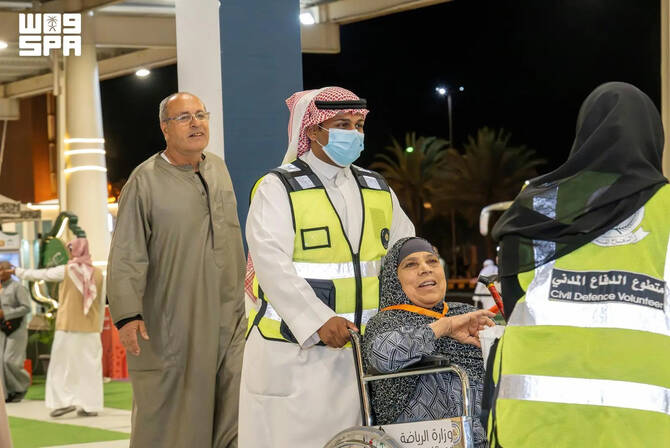
Across Makkah, Mina and the surrounding holy sites, volunteers work in healthcare, guidance, hospitality, and emergency support, often spending hours helping elderly pilgrims, assisting lost visitors, and navigating language barriers with people from across the world.
Abdullah Ali, who has volunteered during Hajj for more than a decade, said serving pilgrims has become part of his identity. He helps guide lost pilgrims and participates in reception and hospitality programs serving visitors throughout the season.
“You first see pilgrims when they are lost and afraid,” he said. “Most of them are elderly, and you can see fear in their faces. Some feel completely overwhelmed by the feeling of being alone.”
He described how those emotions often shift the moment pilgrims are reunited with their groups or safely guided back to their hotels. “The expressions on their faces completely change,” he said. “The smile comes back, and then you start hearing the sincere prayers they make for you.”
Ali said those moments are among the strongest emotional experiences volunteers encounter during Hajj. “The prayers, especially when mixed with tears, are enough,” he said. “It is a feeling that cannot really be described. When you see someone scared and then suddenly reassured because of your help, or when you become the reason their hardship becomes easier, the happiness you feel as a volunteer is very difficult to explain.”
Communication with visitors from overseas remains one of the biggest challenges for volunteers during Hajj, with pilgrims speaking dozens of languages and coming from vastly different cultural backgrounds.
Ali said that technology and AI-powered translation tools have significantly reduced communication barriers in recent years. But beyond technology, he believes volunteering during Hajj teaches people to connect with others emotionally rather than verbally.
“The first language everyone understands is the language of a smile. That smile gives the pilgrim reassurance and calmness. It tells them not to worry,” he said.
Mohammad Najjar, another Saudi volunteer who has spent around two years serving pilgrims, said the experience has changed the way he views people and human connection itself.
“I feel like I benefit from the pilgrims,” he told Arab News. “I’ve learned from the diversity of people, the way every culture thinks differently, speaks differently and communicates differently.”
During last year’s Hajj season, Najjar and fellow volunteers focused on helping pilgrims suffering from diabetes-related foot injuries caused by long walking distances and extreme temperatures.
“We would search for pilgrims with diabetic foot problems and provide them with special medical socks and cushioning materials to help them continue Hajj,” he said.
One case that remained with him involved a Pakistani pilgrim suffering from a severe foot wound.
“We coordinated with paramedics and took him to the hospital,” Najjar recalled. “After they treated the wound, I kept checking on him myself the next day because I wanted him to feel like someone from his own family was with him.”
Najjar said volunteering during Hajj goes far beyond simply completing tasks.
“Sometimes I contact pilgrims even after they return to their countries, just to check on them,” he said. “Many are surprised that someone remembers them.”
Despite the physical exhaustion that comes with volunteering during Hajj, he described the experience as emotionally fulfilling in ways difficult to explain.
“The closer I get to this work, the more energy God gives me,” Najjar said.