
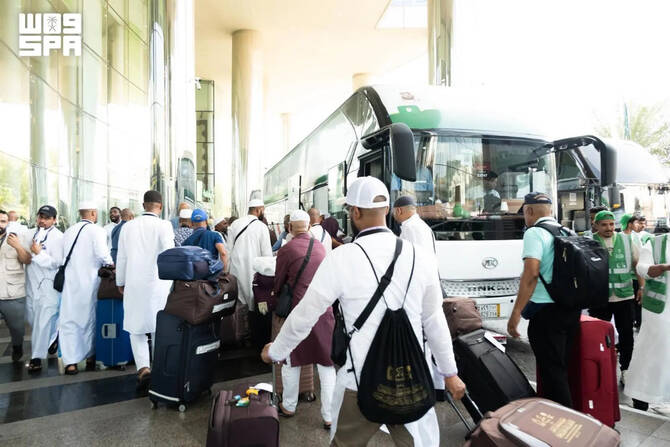


Guests of the Custodian of the Two Holy Mosques’ Program for Hajj, Umrah and Visit departed Makkah for Madinah after completing the Hajj rituals, concluding a key stage of their pilgrimage under a royal initiative that this year hosted 2,500 pilgrims from 104 countries, the Saudi Press Agency reported on Sunday.
The pilgrims completed the full sequence of Hajj rites, including standing at Arafat, spending the night in Muzdalifah, staying in Mina, performing the stoning of the Jamarat during the Days of Tashreeq and concluding with the Farewell Tawaf.
Participants expressed satisfaction with the organization of the pilgrimage and the services provided throughout their journey, saying the arrangements enabled them to perform the rituals smoothly and in a spiritually uplifting atmosphere.
The guests also voiced their appreciation to Custodian of the Two Holy Mosques King Salman and Crown Prince Mohammed bin Salman for the care and support extended to pilgrims, praising the facilities and services that helped ensure a safe and comfortable Hajj experience.

According to the Ministry of Islamic Affairs, Dawah and Guidance, which oversees the program, extensive logistical, healthcare and digital resources were deployed to serve the guests at the holy sites of Mina, Arafat and Muzdalifah.
The pilgrims will now continue their journey in Madinah, where visits typically include the Prophet’s Mosque and other significant Islamic landmarks.
The Custodian of the Two Holy Mosques’ Program is one of Saudi Arabia’s flagship initiatives for serving Muslims worldwide. Fully funded by the Kingdom and implemented annually by the Ministry of Islamic Affairs, the program aims to strengthen Islamic solidarity and deepen ties among Muslim communities across the globe.
Each year, the initiative brings together a diverse group of guests from more than 100 countries, including Islamic scholars, community leaders, intellectuals, media professionals and individuals from underserved or crisis-affected communities who might otherwise face difficulties performing Hajj.
As part of the program, participants receive comprehensive support, including international travel, visa processing, accommodation in Makkah and Madinah, transport, healthcare, translation services, religious guidance and security assistance throughout their stay.
Since its launch more than three decades ago, the initiative has enabled tens of thousands of Muslims from around the world to perform Hajj as guests of the Saudi leadership, reinforcing the Kingdom’s role in serving the Two Holy Mosques and their visitors.