
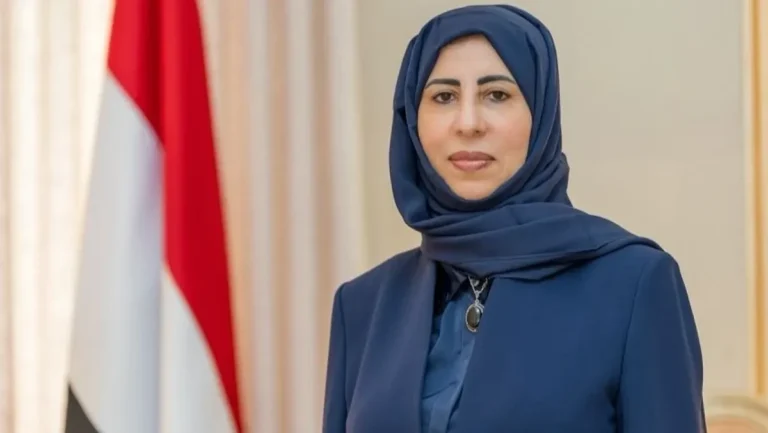
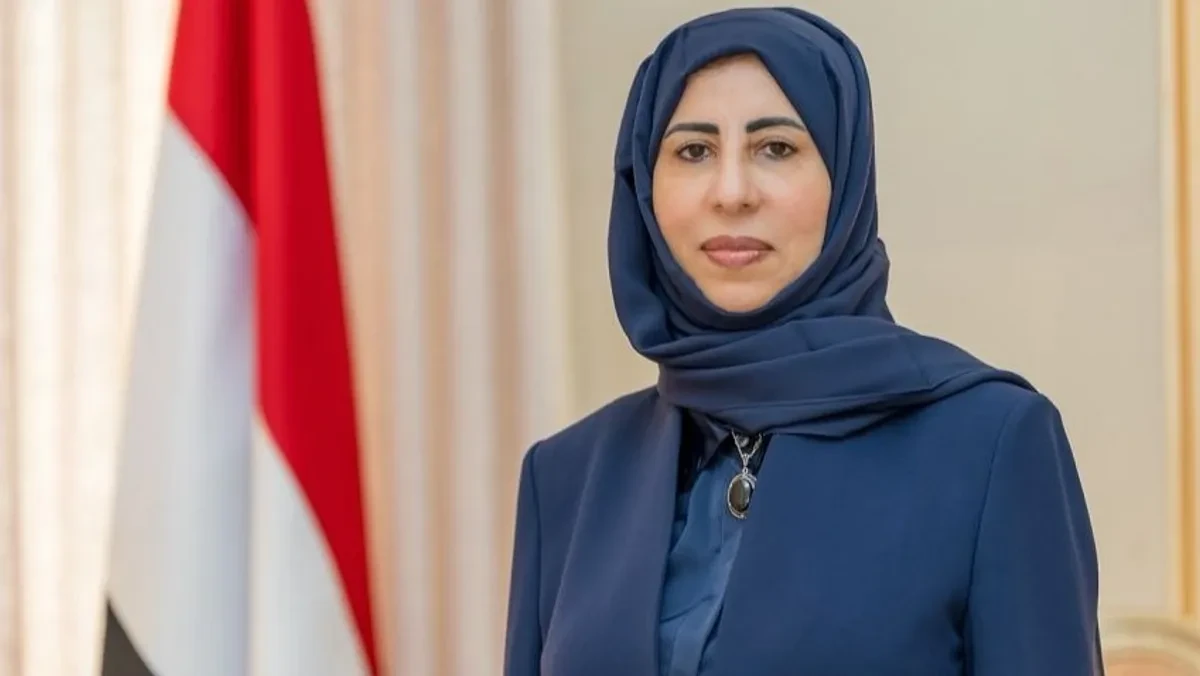
Yemeni official Afrah Al-Zouba has rejected Iranian proposals to mediate the crisis in Yemen, arguing that Iran cannot act as a mediator in a conflict in which the Yemeni government accuses it of being a participant, specifically by providing military and political support to the Houthi group.
In a lengthy post on the platform X, Al-Zouba stated that “those who arm one side in a war cannot be mediators in that same war.” She asserted that the Iranian regime has “made itself a party to the war against the Yemeni people” by providing the Houthis with funding, training, weapons, missiles, and drones.
She added that, rather than offering to mediate, Tehran should instead “withdraw its influence and its weapons from Yemen, respect the sovereignty of nations, and adhere to international law and the principles of good neighborliness.”
Accusations of prolonging the war
The Yemeni official accused Iran of prolonging the conflict by continuing to support the Houthis, noting that Tehran’s talk of mediation coincides with an escalation of hostilities on the ground in Yemen.
She stated that these remarks come at a time when the militia is “intensifying its attacks”—targeting presidential and government headquarters in the interim capital, Aden; imposing a siege on Taiz; striking civilian targets within Yemen; and launching assaults on Saudi Arabia, in addition to threatening international maritime navigation.
Al-Zouba argued that the Iranian proposal for mediation contradicts the Houthis’ persistent rejection of political initiatives and regional and international efforts—including those aimed at returning to a political process.
She added that the group has “exploited periods of de-escalation to regroup and bolster its military arsenal,” asserting that Yemen has been turned into a “bargaining chip” used by Tehran in the context of its regional conflicts.
Refusing to grant the Houthis the legitimacy to represent Yemen
The minister rejected what she described as Iranian attempts to grant the Houthis the status of representing the Yemeni state, or to portray the ongoing conflict as a dispute between Yemen and Saudi Arabia.
She stated that “Tehran’s engagement with the coup-plotting militia does not confer upon it any legitimacy or right to represent Yemen, nor does it grant the Iranian regime any authority to dictate Yemen’s national decision-making.” She added that while the group itself bears responsibility for its own decisions, this does not absolve Iran of the consequences of the military and political support it provides to the group. It asserted that the security of Yemen and the region “will not be contingent upon the assessments of a terrorist group armed by the Revolutionary Guard,” as it put it.
Supporting Saudi Arabia’s right to defend its security
Al-Zouba reiterated Yemen’s solidarity with Saudi Arabia, affirming support for the Kingdom’s right to defend its security and protect its citizens and residents.
She stated that the security of the two nations is “interlinked,” noting that Saudi Arabia “has been, and remains, a pillar of support for Yemen—both its state and its people”—through the economic, humanitarian, and developmental aid it has provided, in contrast to Iran’s continued support for the Houthis.
Furthermore, she remarked that the attacks and threats faced by the Gulf Cooperation Council (GCC) states and Jordan are “not isolated incidents,” but rather part of what she described as “an Iranian approach based on interfering in the affairs of other nations, and arming and funding militias.”
Accusations of violating Yemeni sovereignty
In her response to Iranian calls to respect the sovereignty of states, Al-Zouba reviewed a number of incidents that she said represented a violation of Yemeni sovereignty, including receiving a Houthi representative in Tehran and handing him over to Yemeni diplomatic headquarters, in addition to appointing an Iranian representative to the group in Sanaa and operating flights to Sanaa airport without the approval of the internationally recognized government. She stated that these steps represent “a flagrant violation of the sovereignty of the Republic of Yemen and an explicit breach of the Vienna Convention on Diplomatic Relations.”
Call for international action
The Yemeni Foreign Minister called on the international community to take “practical measures” to counter Iranian interference in Yemen, and to support the government in restoring state institutions and extending its authority over all Yemeni territory.
She also demanded that the Houthis be designated as a “terrorist organization,” that their sources of funding be cut off, that their backers be held accountable, and that the enforcement of the arms embargo imposed on them under UN Security Council resolutions be tightened.
Al-Zouba concluded her statement by emphasizing that peace in Yemen requires halting the flow of weapons to the Houthis, asserting: “Whoever desires peace in Yemen should begin by stopping the weapons with which Yemenis are being killed.”